

On the eastern edge of North America, where the Atlantic Ocean carves rugged cliffs and icy winds shape the soul of the land, lies the Canadian province of Newfoundland and Labrador. Isolated for centuries and marked by waves of migration from Ireland, England, and France, it is a place where language, music, and storytelling have developed into something distinct, enduring, and fiercely local.
Text: Dylan Huxley
Few contemporary groups embody that cultural inheritance as powerfully as Rum Ragged, a four-piece folk band that has become one of the most vital voices in Canadian traditional music today. Based in St. John’s, NL, Rum Ragged offer something rare: a direct line from past to present, from the old fishing outports and coastal kitchens of Newfoundland and Labrador to the global folk music stage.
For German readers just discovering them, Rum Ragged is not simply another Celtic-inspired band from the Maritimes. They are a deeply rooted, dynamic ensemble whose mission is both preservation and revival—to honour Newfoundland and Labrador’s centuries-old musical traditions while ensuring their relevance and vitality in the 21st century.
Rum Ragged’s sound is built on the sturdy foundation of Newfoundland and Labrador’s traditional music. These are not museum pieces. In their hands, this music becomes kinetic, immediate, and emotionally resonant—filled with wit, grit, and warmth.
At the heart of the band are guitarist and vocalist Mark Manning and accordionist and vocalist Aaron Collis, known for their expressive playing and deep knowledge of Newfoundland and Labrador’s folklore and history. They are joined by Zacharie Nash on acoustic guitar and banjo and Colin Grant on fiddle—two accomplished musicians who bring both technical finesse and stage charisma to the ensemble.
Together, they create music that feels like a living tradition—drawing from archival recordings, oral history, and songbooks, but always infused with their own perspective and contemporary sensibility.
To understand Rum Ragged, one must understand Newfoundland and Labrador. Once an independent country, the island joined Canada in 1949 and still retains its own dialects, customs, and identity. Life on the island has long been defined by the sea—fishing, shipbuilding, and maritime trade—and by a fierce sense of community in often harsh and isolated environments. This resilience, humour, and pride are echoed in the music.
Unlike many folk groups that reinterpret tradition from the outside, Rum Ragged comes from within the tradition. They grew up in the communities that shaped this music, and they play it not because it’s fashionable, but because it’s who they are.
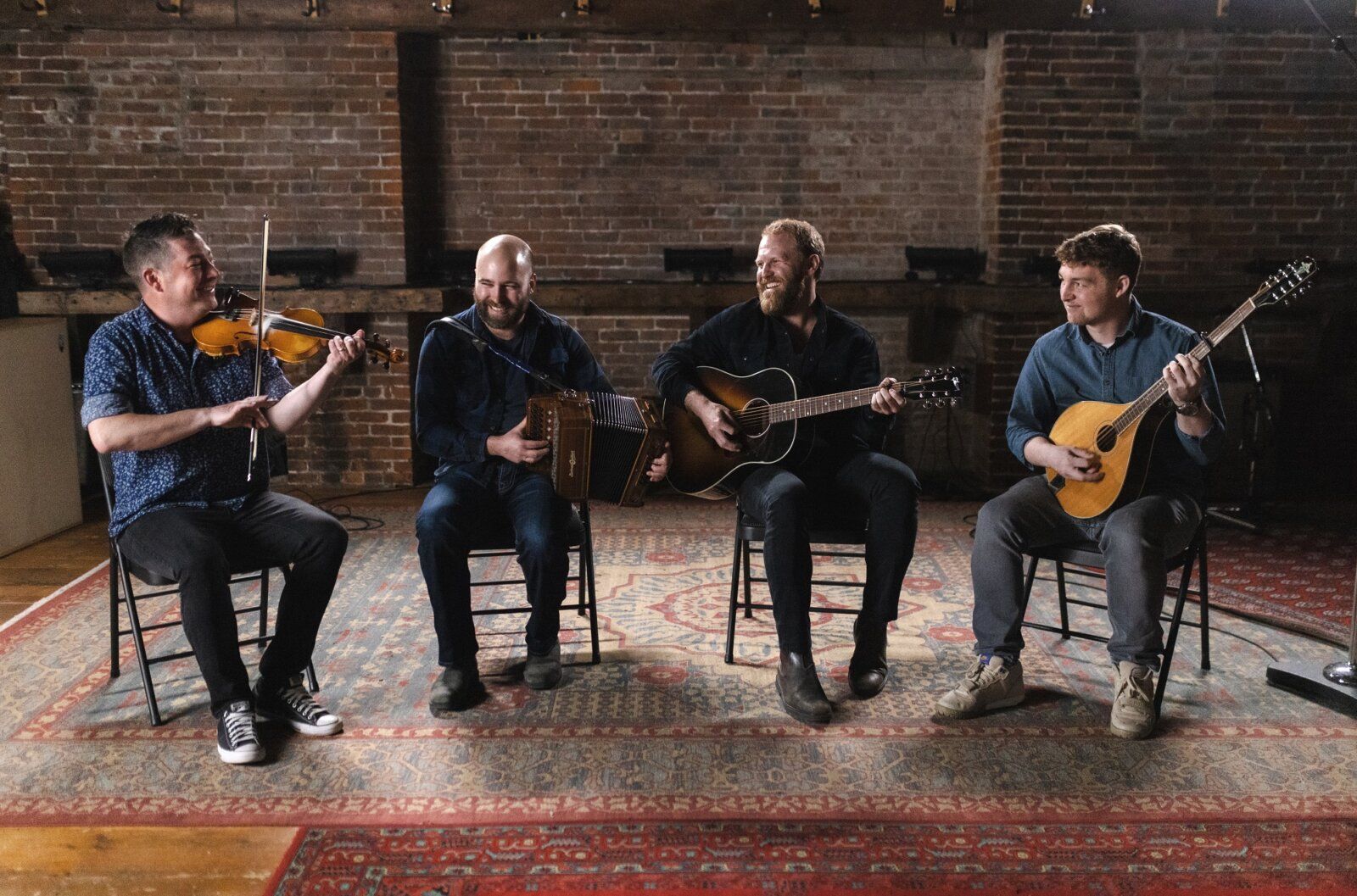
Foto: Jeff Miller & Charlie Benoit
While the band’s work is deeply local, its impact is increasingly international. Over the past several years, Rum Ragged has built a devoted following across Canada, the United Kingdom, and most recently, continental Europe. Their recordings have received national recognition, with multiple nominations from the JUNOs, East Coast Music Awards, and the Canadian Folk Music Awards. Critics have praised the group for their authenticity, technical skill, and ability to balance reverence for the past with a modern approach to production and performance. Their 2020 album The Thing About Fish was widely acclaimed for its conceptual depth and strong songwriting, and their 2023 release Gone Jiggin’ introduced a new generation of listeners to traditional Newfoundland and Labrador material, adapted with care and originality.
„Traditional music, when played with care and conviction, transcends borders.“
Their live shows—which combine storytelling, instrumental fireworks, harmony singing, and audience engagement—have earned them a reputation as one of the most exciting folk acts on the road today.
In October 2025, Rum Ragged performed for the first time in many German cities as part of a 24-date European tour. While their concerts introduced them to new audiences, it was clear that their music resonated far beyond its geographic roots. The themes of Rum Ragged’s songs—love, loss, laughter, hardship, and celebration—are universal, and the group’s warm, engaging stage presence made a lasting impression.
Listeners across Germany responded strongly not only to the musical craftsmanship but also to the cultural depth of the material. The band’s commitment to context—explaining the origins and meanings of the songs—transformed each performance into a meaningful cultural exchange. For many audience members, it was a first glimpse into the traditions of Newfoundland and Labrador, a part of Canada rarely represented on European stages. For Rum Ragged, it marked a powerful moment of connection—affirming that traditional music, when played with care and conviction, transcends borders.
As Rum Ragged’s international reputation grows, so, too, does their ambition. A new studio album is currently in development, with plans to further expand their touring reach across Europe, North America, and Australia in 2026 and beyond. But no matter how far they travel, their focus remains constant: to keep the sounds of Newfoundland and Labrador alive, to connect with audiences through honest and powerful music, and to remind listeners that the most local songs are often the most universal.
To see Rum Ragged live is to experience a cultural immersion—not only in the sounds of Newfoundland and Labrador, but in its stories, struggles, and joys. As their music continues to find new audiences across Europe, it becomes clear that what they offer is not just entertainment, but a powerful reminder of what folk music can be: personal, political, poetic, and profoundly human.
Current albums:
Gone Jiggin’ (LHM Records, 2024)
All The Bells And Wassails (LHM Records, 2025)
About the author: Dylan Huxley is a singer/songwriter and music lover from Newfoundland who now lives in exile in Nova Scotia.
Aufmacher:
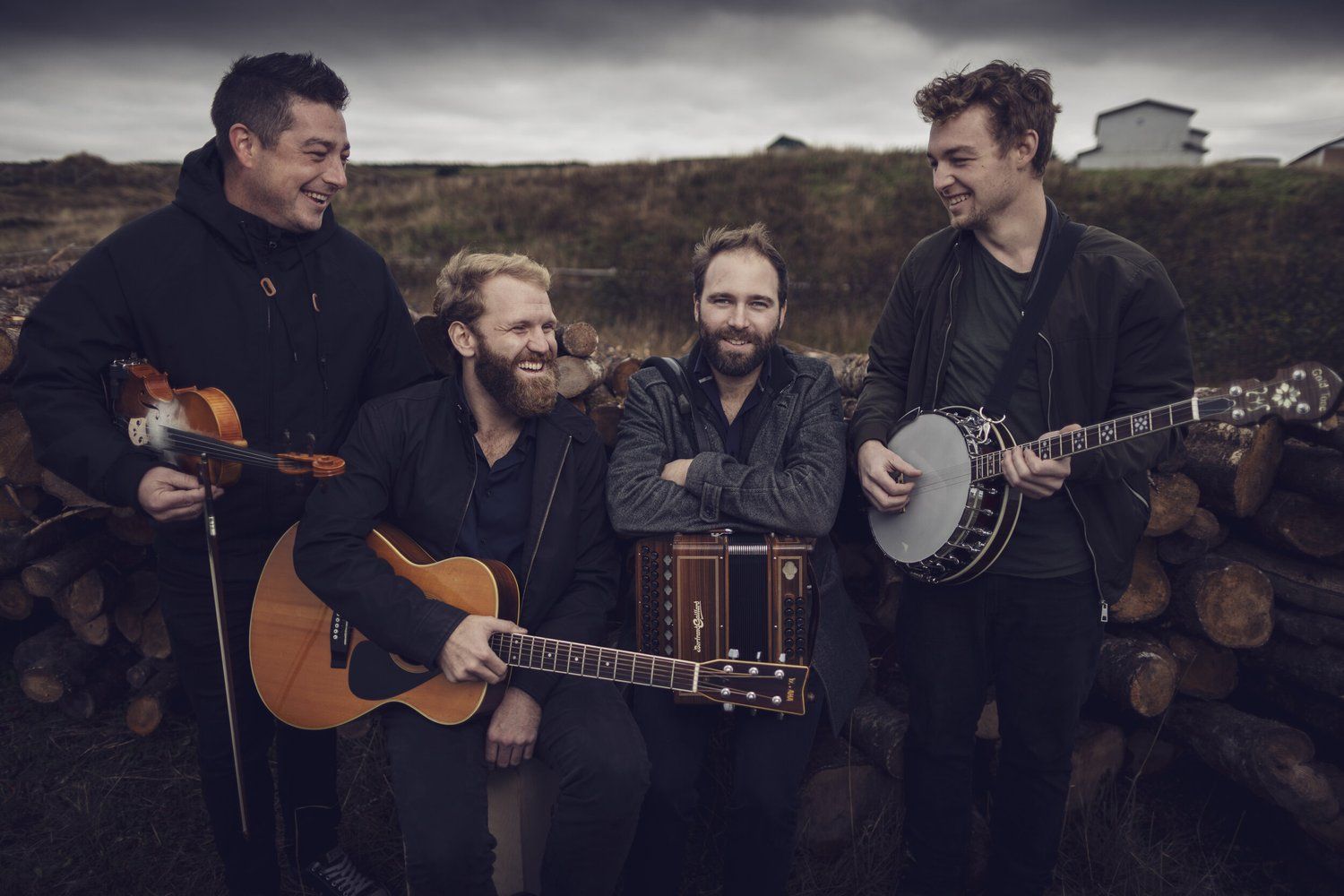
Foto: David Howells



0 Kommentare