

The east coast of Canada has a reputation for good times and great music, and Nova Scotia is deeply rooted at the centre of it all. With the capital city of Halifax being the largest urban area in the Atlantic provinces, it’s natural that Nova Scotia would play an integral role in the development of this reputation. Musicians from all over the province and throughout the region seem to find their way there at some point.
Text: Dave Mahalik
Halifax’s music scene attracted international attention in the 1990s, drawing comparisons to the Seattle, Washington grunge scene, based partly on the tight-knit musical community and its indie-DIY attitude. Fueled by the mainstream commercial success of indie-pop-alt-rock band Sloan, and major record label signings of fellow homegrown groups Thrush Hermit and Jale, Halifax became the de facto centre of the East Coast music industry, with music emerging simultaneously as an important export for the province, and an attraction for visitors.
Iconic Cape Breton band The Rankin Family was based in Halifax around this time. Their blend of traditional Cape Breton/Scottish/Gaelic songs and tunes with contemporary pop and country influences was a big hit at festivals, concerts, and on the radio. Before long, they could barely keep up with demand for their first two independently released albums. People bought the CDs and cassettes in droves at shows, tourist shops, gas stations, restaurants, and out of the trunk of the car—basically, wherever the band could find to sell them.
„The heart and soul of the music come from Cape Breton Island.“
The Rankins wound up setting up shop in the city to handle distribution, further contributing to the growing industry while underlining the do-it-yourself approach that was driving the scene. Signed to a major label around the same time as Sloan, The Rankin Family would go on to sell millions of records world-wide, helping to prove the widespread appeal of music from Nova Scotia and the viability of a music industry in Halifax.
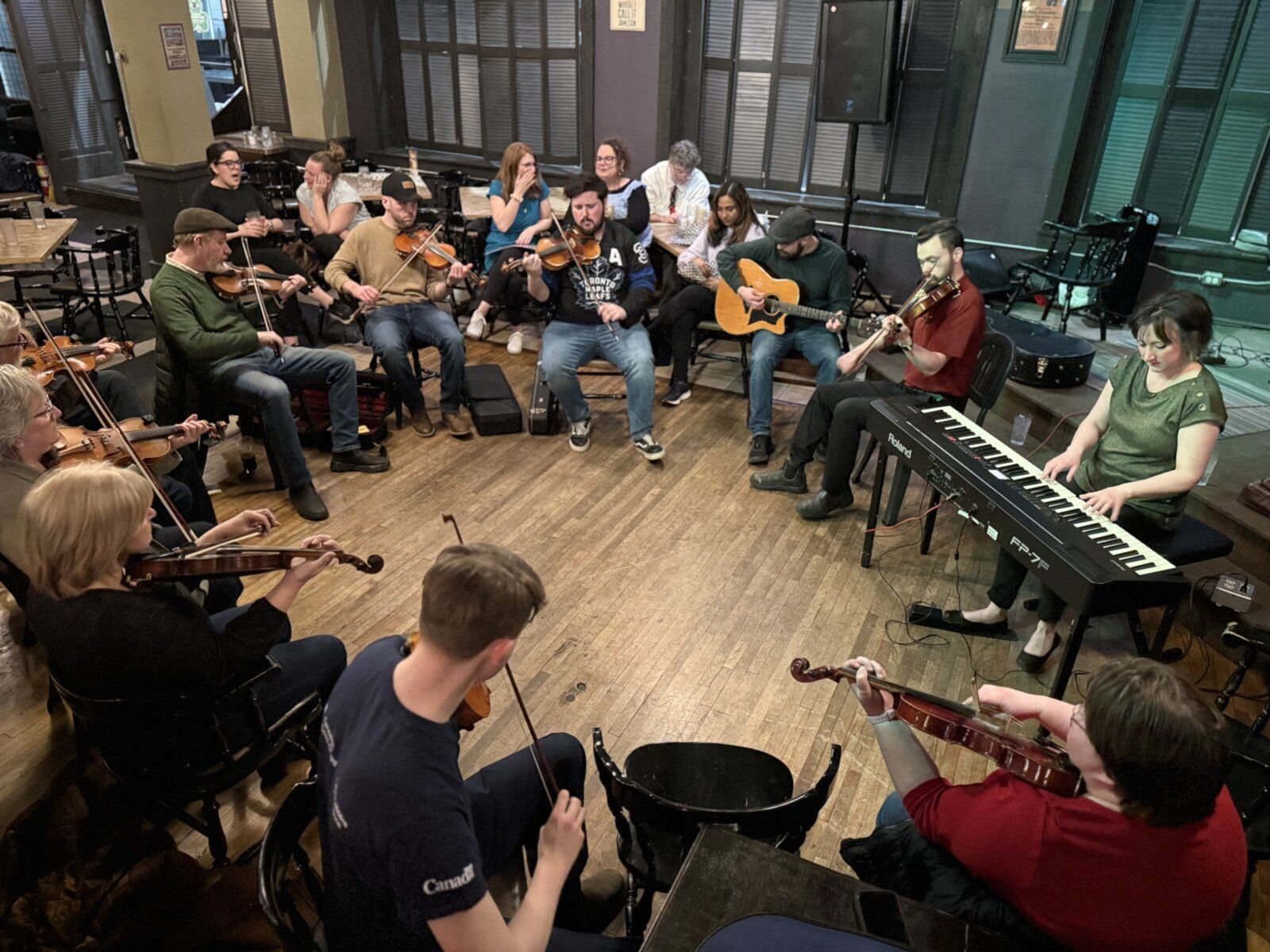
Session mit Kimberley Fraser im Old Triangle Irish Alehouse, Syndey
Foto: Aaron C. Lewis
As the capital city was exploding with the indie-pop-alt-rock sound that put it on the musical map, something was steeping elsewhere in the province. If Halifax was the centre of the music industry, it could be argued that the heart and soul of the music came from Cape Breton Island.
In the 1990s, a generation of mostly rural Cape Bretoners was coming of age in a world on the verge of mass media saturation. They were exposed to what was happening musically in Halifax, and elsewhere in the world, but that wasn’t the only factor that would lead to the worldwide success achieved by the Rankins, Natalie MacMaster, Ashley MacIsaac, The Barra MacNeils, and Bruce Guthro
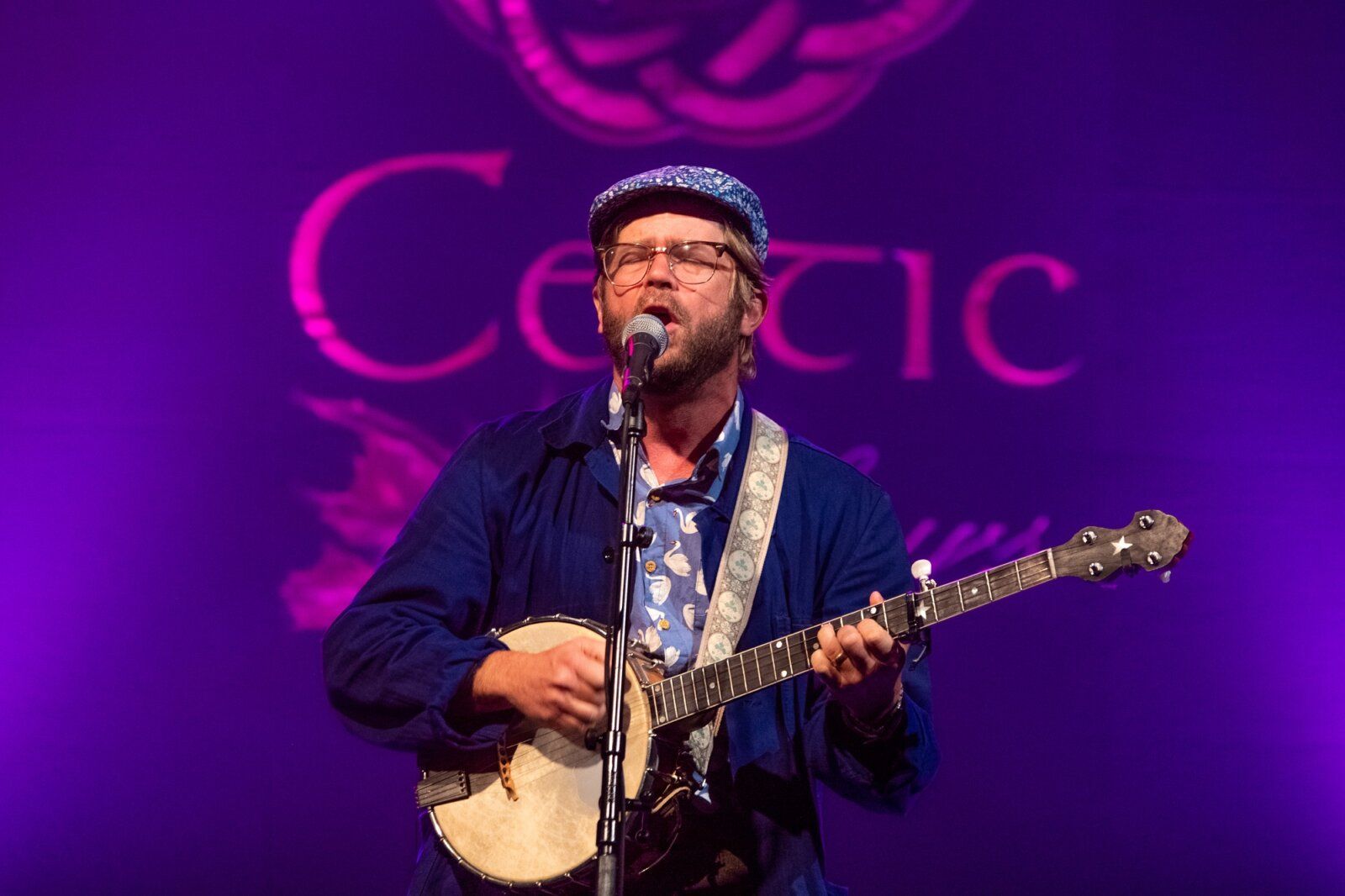
Old Man Luedecke bei den Celtic Colours 2020
Foto: Corey Katz
This generation had grown up in the shadow of The Vanishing Cape Breton Fiddler, a documentary that aired on CBC television in 1972. The program expressed concern that Cape Breton’s traditional fiddle music, the music that had come over with the Scottish immigrants back in the 1800s, was dying out. The very notion was met with a groundswell of community effort to not let that happen and the musical tradition regained its foothold through a variety of measures, including the formation of a fiddlers’ association, the organization of a fiddle festival, and the fact that music had always been played at home.
Getting together with family, friends, and neighbours to sing songs and play instruments is a hallmark of music in Nova Scotia, particularly on Cape Breton Island where generation after generation maintained their musical heritage and cultural identity by doing just that. Informal gatherings known as céilidhs, where everyone joined in the music making, dancing, and storytelling, had been an integral part of social life among the Scottish Gaelic immigrants since before they started settling on the island two hundred and fifty years ago. This tradition carried on in the new country, and before television found its way into even the most rural of areas, céilidhs and community dances were the primary forms of entertainment.
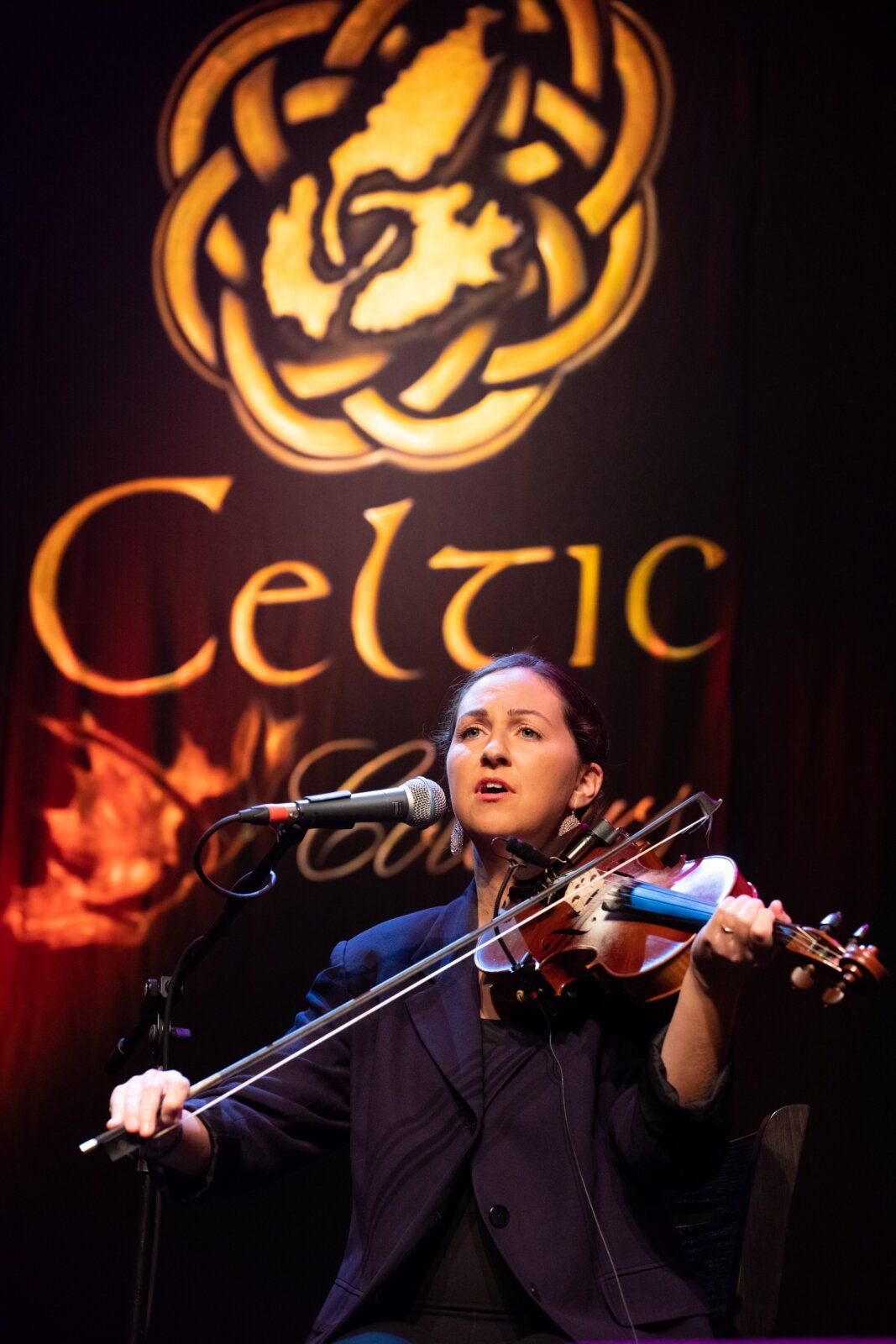
Rose Morrison bei den Celtic Colours 2022
Foto: Corey Katz
Some would say the word céilidh has since been co-opted for marketing purposes (it’s a noun not a verb, so you can’t really “come céilidh with us”, although it is a nice sentiment), but that doesn’t dull its authenticity. And it doesn’t mean that Cape Bretoners don’t still gather in the kitchen for tunes during a house party! The kitchen party, where instruments are passed around and songs are shared, is the modern-day version of the traditional céilidh. And playing music continues to be at the heart and soul of these ever-popular social occasions.
This idea of a bunch of musicians getting together to play music, just to play, without any formal intentions, to play with each other rather than for an audience, has been spilling out of the kitchen lately and into the local bars. Traditional music sessions in Scottish and Irish pubs go back to the 1940s, but they are relatively new on the scene in Nova Scotia where this kind of thing usually happened at someone’s house. In Cape Breton these sessions are popping up all over the island.
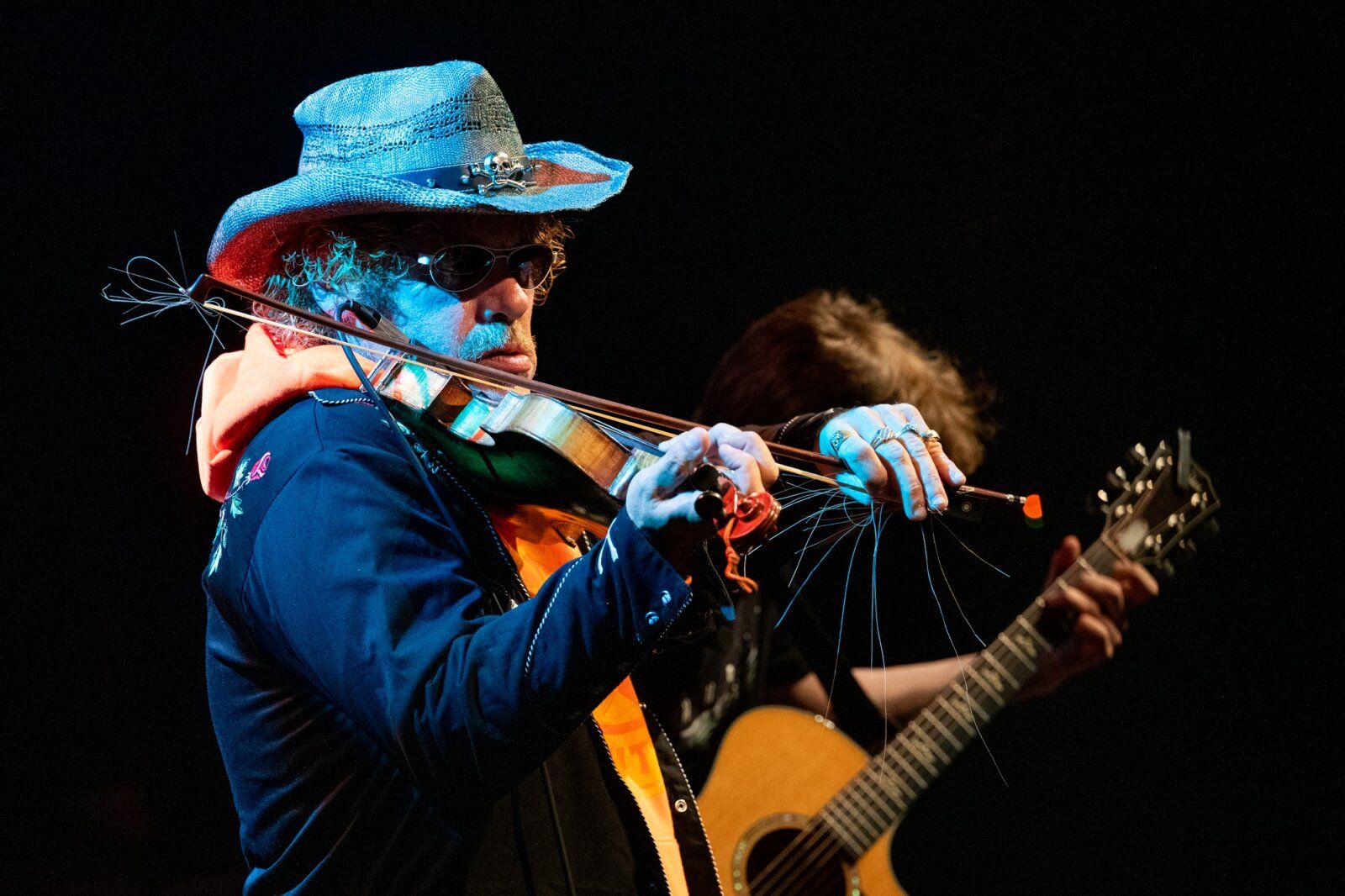
Ashley MacIsaac bei den Celtic Colours 2024
Foto: Corey Katz
In Inverness County, fiddler Gillian Head hosts a trad session on Sunday afternoons in Chéticamp at the Doryman Pub, and there’s a mid-week session at the Admiral Lounge in Port Hood lead by well-known local players like Kinnon and Betty Lou Beaton, Brian MacDonald, and Iain MacQuarrie. Ryan and Boyd MacNeil, from the Barra MacNeils family, host a well-attended monthly Celtic Session at the Island Folk Cider House in Sydney. And across town at the Old Triangle Irish Alehouse, renowned fiddler and piano player Kimberley Fraser leads a popular weekly session that has featured a who’s who of special guests including Howie MacDonald, Mac Morin, Shelly Campbell, Chrissy Crowley, Joel Chiasson, Rachel Davis, and Colin Grant among many others. An open session follows welcoming all to participate.
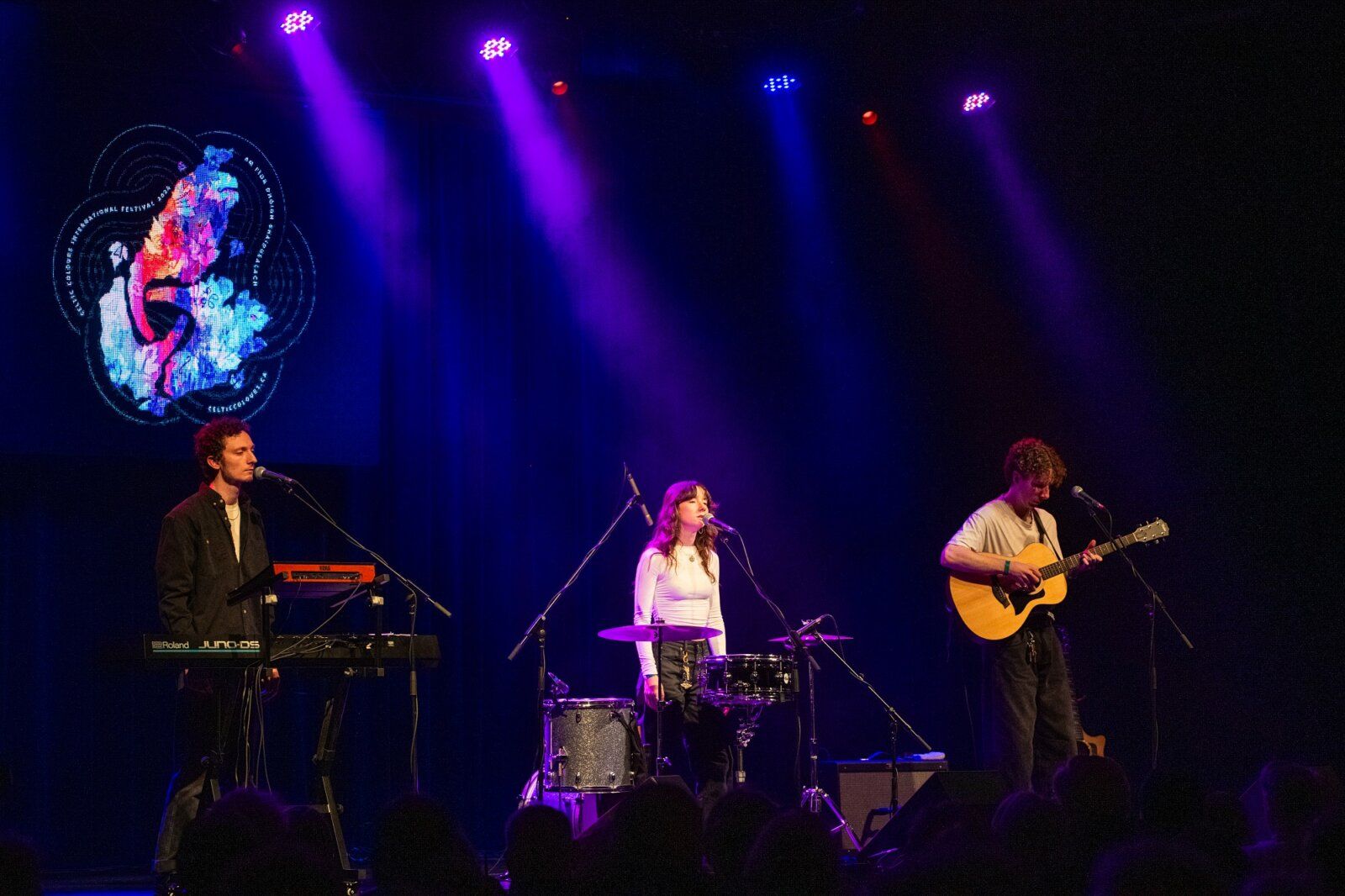
The Gilberts
Foto: Corey Katz
Throughout post-industrial Cape Breton, open mic nights are a beacon for singers and songwriters and there’s one practically every night of the week in Sydney. The three main ones—at Governors Pub & Eatery, the Black Diamond Bar & Grill, and Daniels Alehouse and Eatery—are hosted by musicians from popular bands Slowcoaster/Hauler, the Tom Fun Orchestra, and Pretty Archie. The Loose Cannon, in Halifax, Staggers Pub & Grub in Dartmouth, Freeman’s in Sackville, and The Commune in Truro also host regular open mics.
„Getting together with family, friends, and neighbours to sing songs and play instruments is a hallmark of music in Nova Scotia.“
There’s so much to choose from on the musical landscape of Nova Scotia, so many opportunities to experience folk music in its natural environment. And nowhere does folk music come alive more than during a multi-day music festival.
Two of the more prominent folk festivals in the province are the Stan Rogers Folk Festival and Celtic Colours International Festival. Named for the legendary singer, “StanFest” is presented in the former fishing village of Canso, where Rogers’ family has roots. The multi-stage, outdoor event regularly features a wide range of local songwriters like Old Man Luedecke, Dave Gunning, J.P. Cormier, Buddy MacDonald, Joel Plaskett, Adam Baldwin, Rose Morrison, and Jordan Musycsyn alongside such national and international luminaries as Valdy, Richie Havens, Arlo Guthrie, and Don McLean.
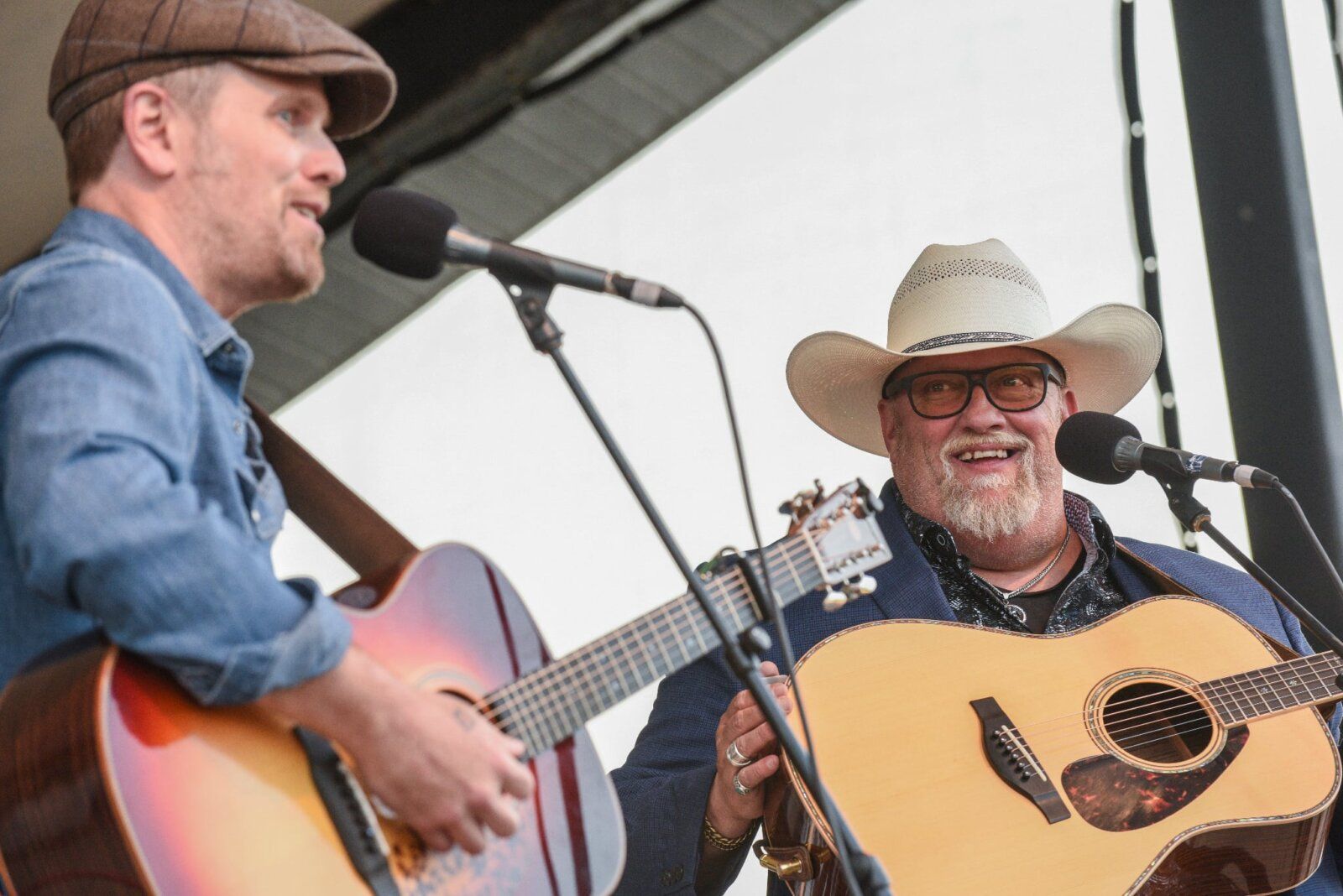
Dave Gunning mit JP Cormier beim Stan Rogers Folk Festival
Foto: Chris Smith
While StanFest happens over a weekend in a huge field with a vast camping area off to the side, Celtic Colours is spread out over nine days with dozens of concerts and hundreds of cultural experience events in communities all over Cape Breton Island. Focussing on traditional and contemporary folk music that falls under the “Celtic” banner, Celtic Colours showcases Cape Breton’s finest singers, players, dancers, and tradition-bearers and their counterparts from the Celtic corners of the world. Some of the biggest names in Celtic and folk music have performed on Celtic Colours stages over the past 28 years including The Chieftains, Sharon Shannon, Carlos Nùñez, Loreena McKennitt, John Doyle, Dirk Powell, Rhiannon Giddens, Natalie MacMaster, Ashley MacIsaac, Mary Jane Lamond, and Julie Fowlis.
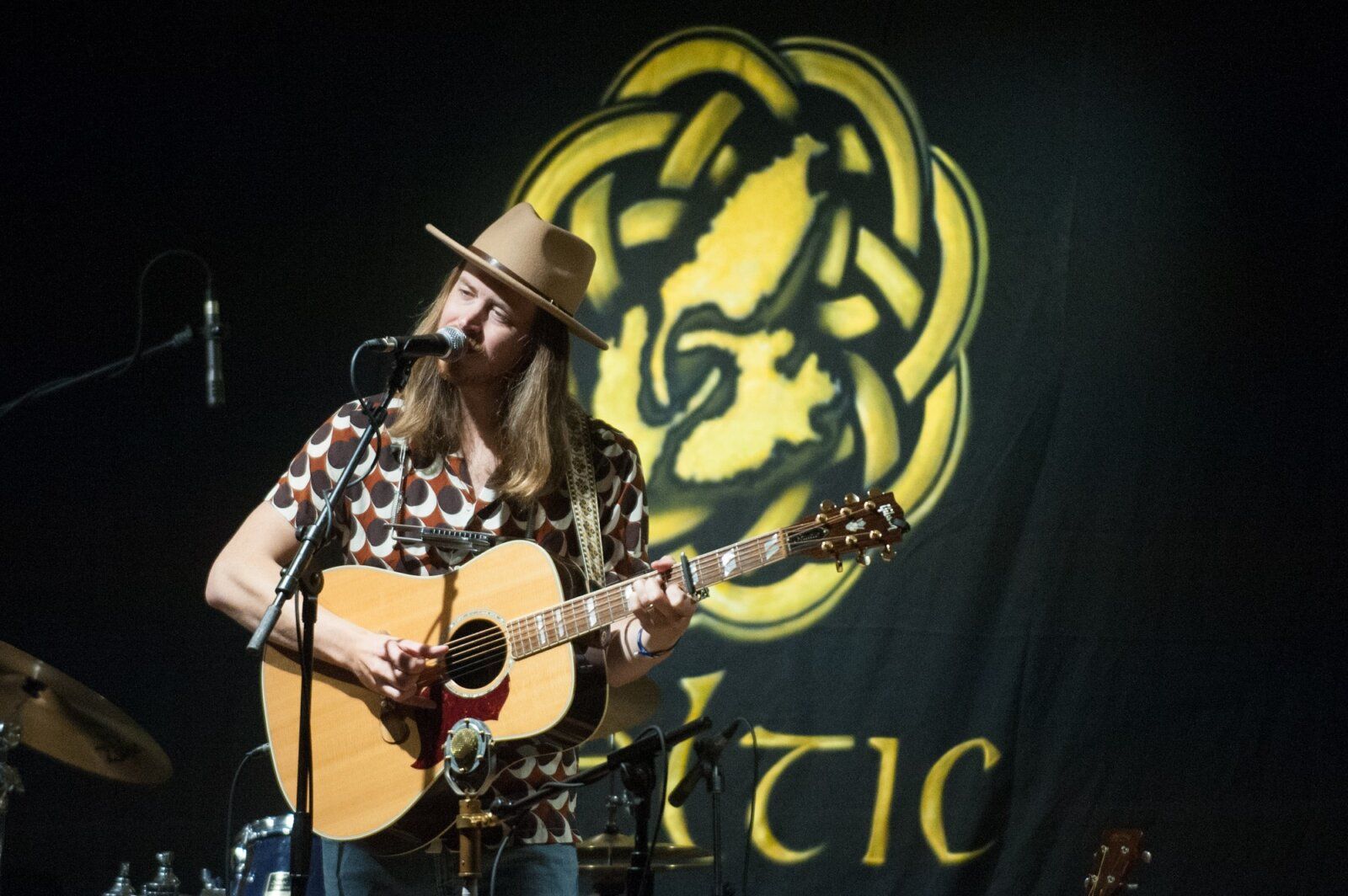
Jordan Musycsyn
Foto: Murdock Smith
The list is endless, but Heather Rankin, the Barra MacNeils, Jimmy Rankin, Lucy MacNeil, Beòlach, Cassie & Maggie, Rachel Davis and Darren McMullen, Morgan Toney, Terra Spencer, the Gilberts, Pretty Archie, and Aaron MacDonald are among the variety of local artists you’ll find at festivals scattered around the province from the Lunenburg Folk Harbour Festival and Deep Roots Festival on the mainland to the Acoustic Roots Festival, Kitchenfest!, and Blueberry Jam on Cape Breton Island.
Nova Scotia’s live music scene benefits from a diversity of styles and genres, encompassing the jangly, indie-pop-alt-rock that grabbed the international spotlight and helped establish the industry thirty years ago to the easy listening country-pop and traditional/folk sounds of Anne Murray, Rita MacNeil, John Allan Cameron, and Stan Rogers, to the multitude of singer-songwriters, trad instrumentalists, and Celtic-crossover artists of today.
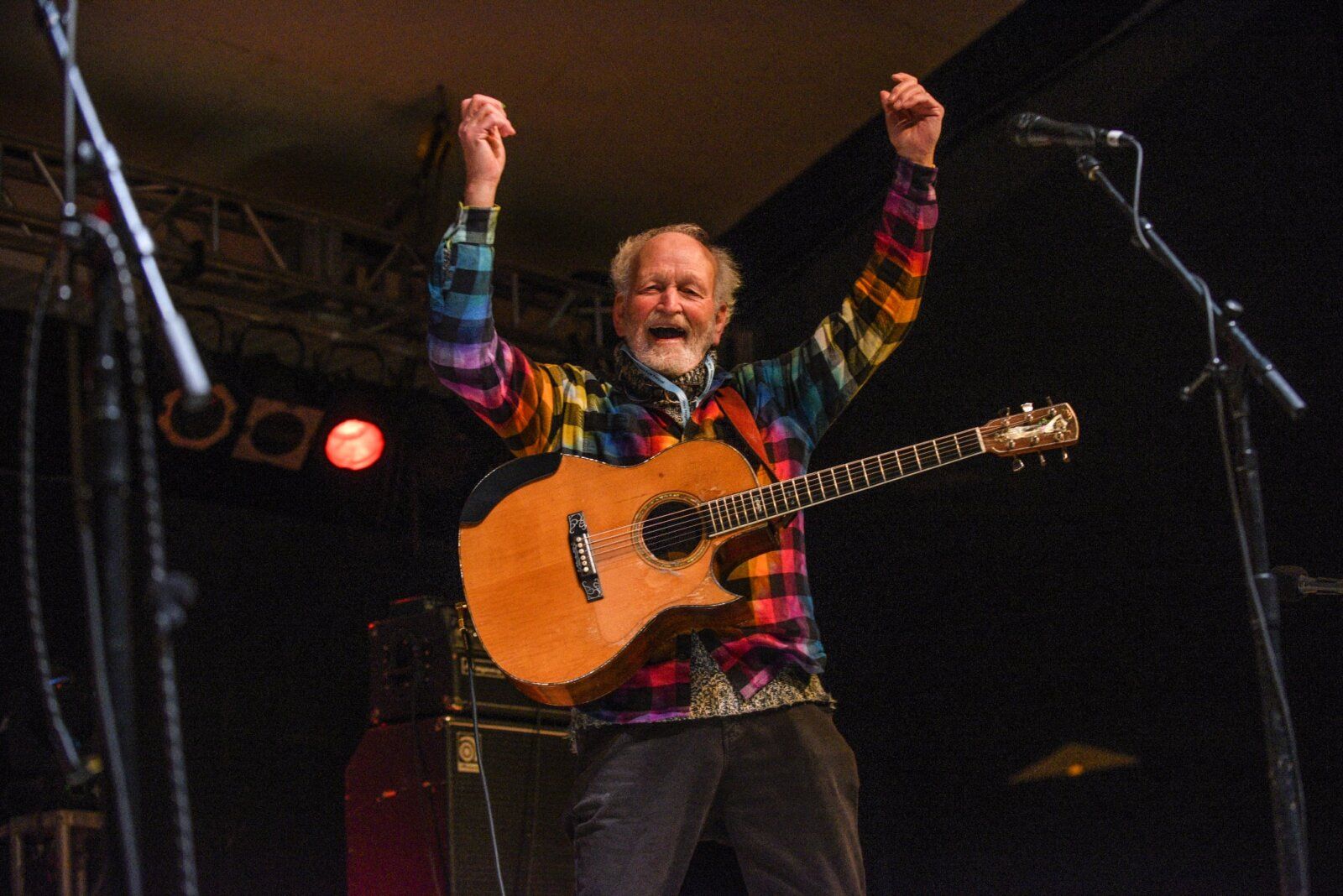
Valdy beim Stan Rogers Folk Festival 2025
Foto: Chris Smith
The musical culture is strong here, passed down over generations through families and around the community. It thrives in a variety of environments, each offering their own perks and pitfalls. From kitchen parties and community halls to pubs and bars to theatres and festivals, the underlying tradition of friends and neighbours getting together to play music, for the sheer joy of it, ensures that Nova Scotia’s will continue to live up to its musical reputation.
About the author: Dave Mahalik has worked in Canada’s East Coast music industry since the early 1990s as a writer, editor, publisher, publicist, and performer. He founded Cape Breton arts magazine What’s Goin On (1995-1999) and local entertainment guide WGO weekly (1997-2003), before taking on his current job of Communications Manager for Celtic Colours International Festival in 1999. He has worked in the Press Office of Glasgow’s Celtic Connections festival, composed album liner notes and artist biographies, and written a book about Celtic Colours, 10 Nights Without Sleep. Mahalik has also performed, recorded, and toured internationally with award-winning Cape Breton band the Tom Fun Orchestra for almost twenty years.
Interesting links:
Musicians:
www.facebook.com/jordanmusycsynmusic
www.natalieanddonnell.com (Natalie MacMaster & Donnell Leahy)
www.rachelanddarren.com (Rachel Davis & Darren McMullen)
Organisations & festivals:
Acoustic Roots Festival im Two Rivers Wildlife Park in Marion Bridge; jährlich Ende August; Folk, Blues, Celtic, Country and Bluegrass.
Blueberry Jam Festival auf der Big Belle Farm, Mabou Ridge, Cape Breton; feiert sowohl die Heidelbeerindustrie als auch die (traditionelle) Musik der Provinz.
Cape Breton Fiddlers’ Association in Dominion, Cape Breton
Neun Tage lang Dutzende von Konzerten und Hunderte von kulturellen Veranstaltungen in Gemeinden auf der ganzen Insel; Schwerpunkt auf traditioneller und zeitgenössischer „keltischer“ Folkmusik; mit großen nationalen und internationalen Stars.
Festival der Deep Roots Music Cooperative in Wolfville; jährlich Ende September plus unter anderem weitere Konzertreihe den Sommer über.
Lunenburg Harbour Folk Festival, Lunenburg; jährlich im August plus weitere Konzertreihe im Herbst.
KitchenFest! Féis a’ Chidsin! des Gaelic College, St. Ann’s, Cape Breton; jährlich Ende Juni, Anfang Juli; feiert die gälische Kultur der Insel mit Konzerten, Ceilidhs, Theaterstücken, Pub Nights und Square Dance.
Ausrichter des Festivals Rock the Fiddle in Sydney, das jährlich im August stattfindet, und weiterer Events das ganze Jahr über.
Open-Air-Festival jedes Jahr Ende Juli im Fischerdorf Canso, mit mehreren Bühnen und teils internationalen Stars.
Locations:
Im Doryman Pub in Chéticamp veranstaltet die Geigerin Gillian Head jeden Sonntagnachmittag eine Tradsession.
www.facebook.com/admiralloungeanddiningroom
In der Admiral Lounge in Port Hood gibt es jeden Mittwoch eine von bekannten lokalen Musikschaffenden angeleitete Session.
www.facebook.com/danielsalehouseandeatery
Daniels Alehouse and Eatery, Sydney; regelmäßige Open-Mic-Veranstaltungen mit Daniel Cathcart.
Wöchentliche Session mit Kimberley Fraser im Old Triangle Ale House in Sydney.
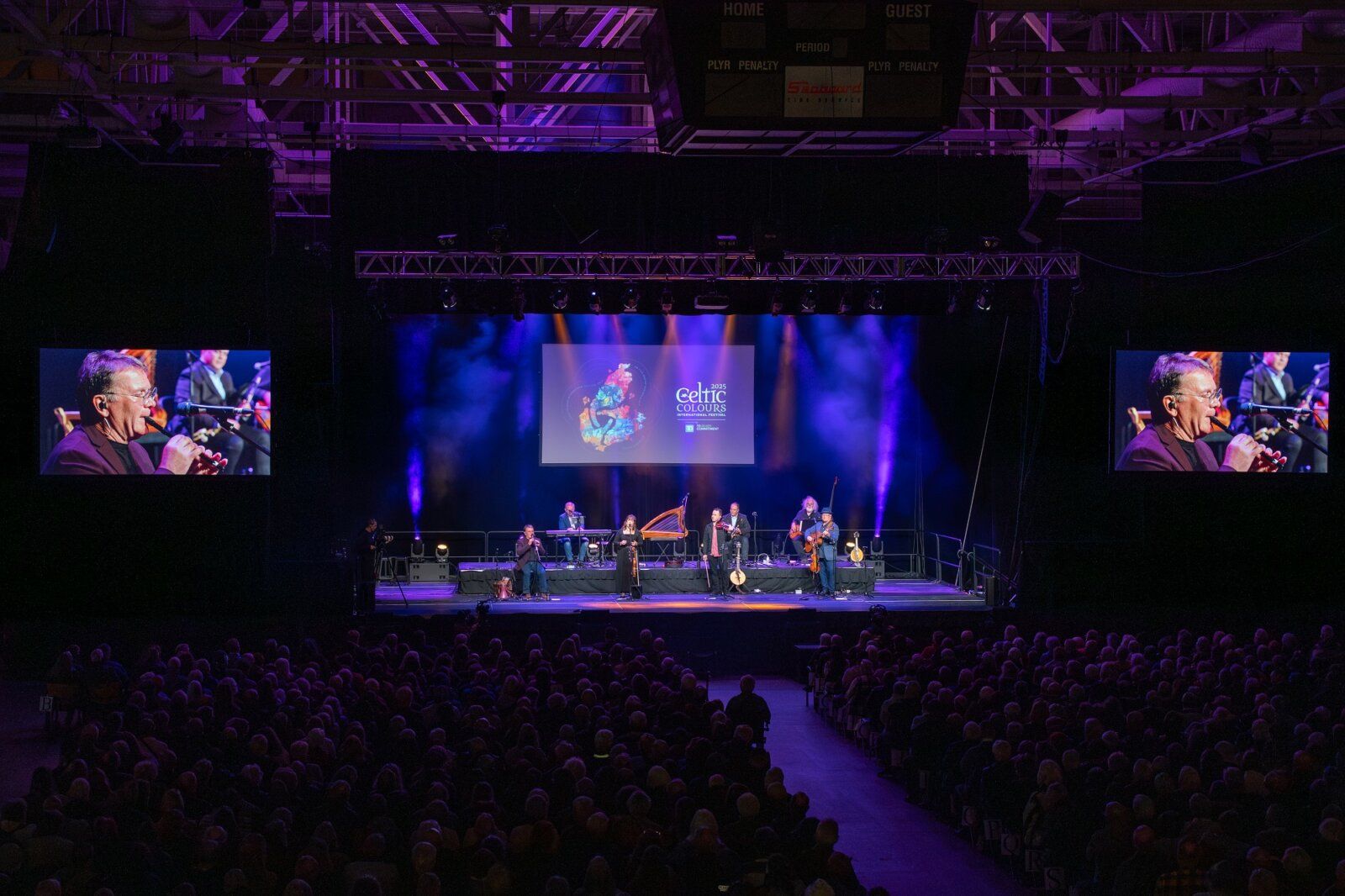
The Barra MacNeils bei der Eröffnung der Celtic Colours 2025
Foto: Corey Katz
0 Kommentare