

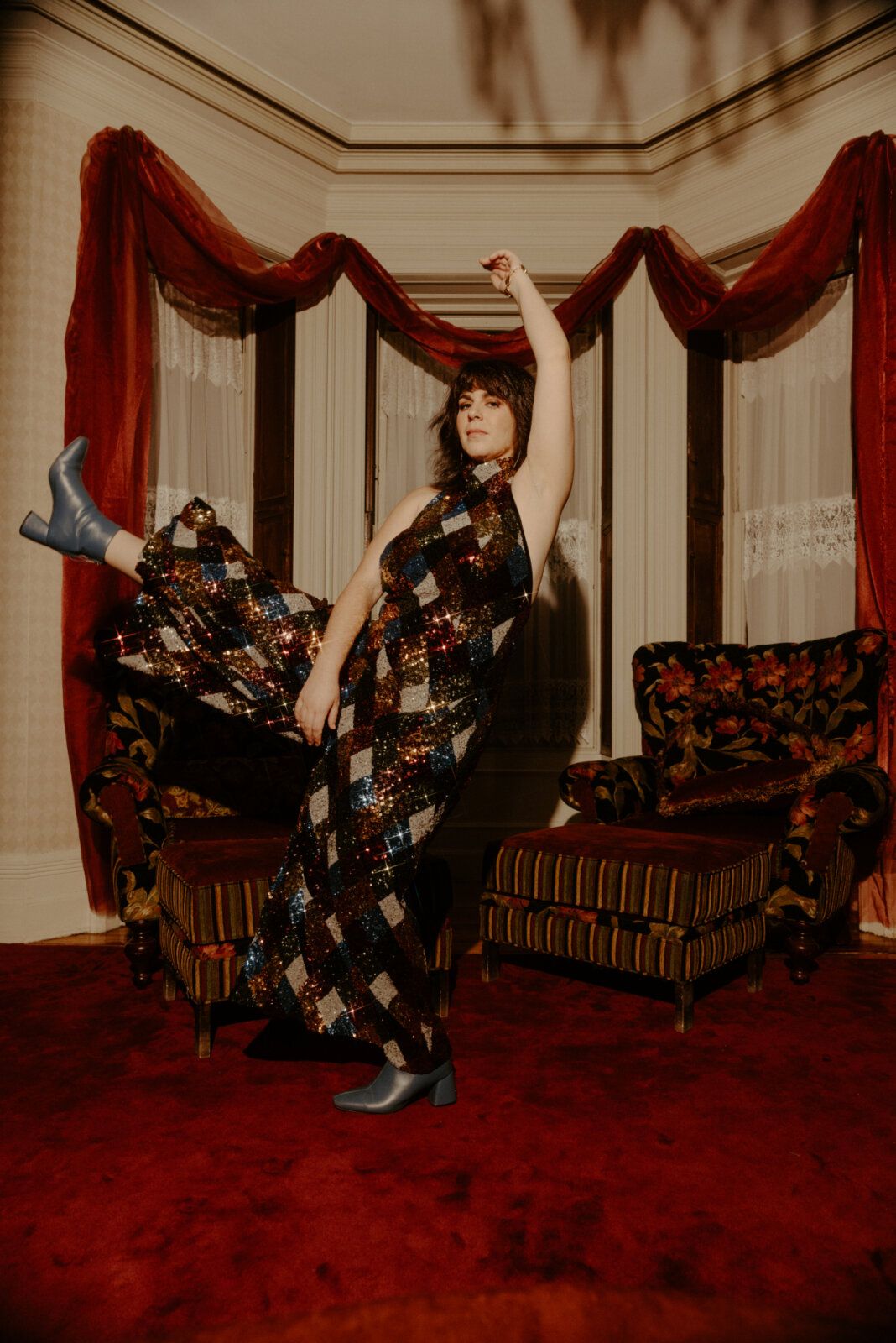
Try as hard as you can, but you’ll never be able to predict what Lisa LeBlanc is going to do next. Throughout her thirteen-year recording career, she has released albums in wildly different styles. She started as a country punk, shredding a banjo, describing her style as “folk trash” (as opposed to folk rock). Her songs featured her singing in Chiac, the New Brunswick, Canada dialect that combines Acadian French with English terms, including the occasional curse
Text: Bob Mersereau
It proved a smash hit, and her self-titled debut quickly saw her become a star in Quebec and the rest of Francophone Canada. Then came shows in France, Belgium, and other French-speaking countries. Her debut went Platinum, the biggest-selling Atlantic Canadian album of the 21st century.
Then she defied expectations by following up with an English EP, and building her audience with gigantic, fun-filled festival shows, mixing her own quirky songs with a banjo-shredding cover of Motorhead’s metal classic “Ace Of Spades.”
When COVID sent everyone back to their homes, LeBlanc took to social media to entertain her fans, inventing an alter-ego named Belinda, who hosted a weekly Bingo game. It turned out that Belinda had a passion for outrageous clothes and classic 1970s music, so LeBlanc’s next release was a glittery disco album. With the pandemic over, she took that show on the road, a disco tour complete with costumes, flashing lights, and lots of dance moves.
So, she’d done folk, rock, metal, country, disco, French, and English, what could be next? On her latest album, she mixed it all up into one big show, Live Avec L’Orchestre Symphonique De Quebec. Lisa with strings, woodwinds, and brass? It was gigantic and gorgeous, of course.
LeBlanc loves to sing about her Acadian culture and lifestyle. Growing up in tiny Rosaireville, New Brunswick, there was a lot of food, fun, and family. “On my father’s side, there were sixteen kids, a huge family,” she says. “My grandma was a piano player. We went to church on Sundays so Grandma would be happy, and then after that we would all go to her house. There were always a bunch of people, and she was always making food, there was always a fricot or something, food enough for everybody, and a lot of music. Nowadays, I feel so lucky to have had that kind of experience, it was a really special upbringing. It was a very small town, so people played music as a hobby, just to pass the time, have a good time together, that was the entertainment.”
She heard lots of classic rock and metal at family jams, as well as traditional Acadian music, which gave her a strong folk background. Right from the start, she was equally comfortable singing in either French or English, or both in the same song. When she started writing her own songs, she just did what came naturally.
“I wasn’t really thinking of writing in Chiac,” she says. “It was half and half, that first album. Some of it was more standard French, some of it was really Chiac, it was how I spoke. There was something about the Chiac accent that made it fun to sing, and it’s natural for me. It’s got its own little swing, it’s pretty awesome.”
Often, LeBlanc finds herself in front of audiences unfamiliar with the Acadian culture, of Canada’s maritime provinces of New Brunswick, Prince Edward Island, and Nova Scotia. On a recent tour of Japan, LeBlanc got to tell the audiences all about her home. “We had translators on stage, which was a first for me, to be at the mercy of someone translating. It was fun to be able to tell what the songs were about, explaining the differences between the accents, doing a little history of Acadia, and some geography lessons. We made them sing in Japanese about boiled potatoes, carrots, turnips, everything boiled,” she laughs. “I never saw myself as a cultural ambassador. I’ve never written to be that. I write music, and for me, the power of music is bringing people together. That’s why I do it. It’s the thrill of seeing people having a good time.”
They certainly have a good time. Her shows are celebrations, her own joy infectious throughout the crowd. When she played the open-air FrancoFolies in downtown Montreal, the biggest French-Canadian music event of the year, the streets were packed for blocks. “I think there were 60,000 people, it was insane,” she says. “That’s one of my favourite shows of all time, I just couldn’t believe what was happening to us.”
These days LeBlanc is off the road, back in New Brunswick, writing her next project. Even she doesn’t know what to expect. “It’s a pretty big project, a lot of collaborations,” she says. “I’m going to Louisiana to record soon, I’m working with some Cajun artists to get that swampy vibe. We’ll see, I’m really excited to see what the players we have are going to bring to the table, and how it’s gonna change it. “I love doing that. I get bored easily. I’m always chasing that high, of what is the new thing right now. What am I feeling like? How do I want this? At some point, it takes a while, but when it clicks, it clicks.”
Where she is going next is anyone’s guess, including hers.
Current album:
Live Avec L’Orchestre Symphonique De Quebec (Bonsound, 2024)
About the author: Bob Mersereau is a music journalist and author from Fredericton, New Brunswick. As a long-time cultural journalist for the Canadian Broadcasting Corporation (CBC), he has reported extensively on the music scene on Canada’s East Coast. His books include The East Coast Music Book of Fame and The Top 100 Canadian Albums.
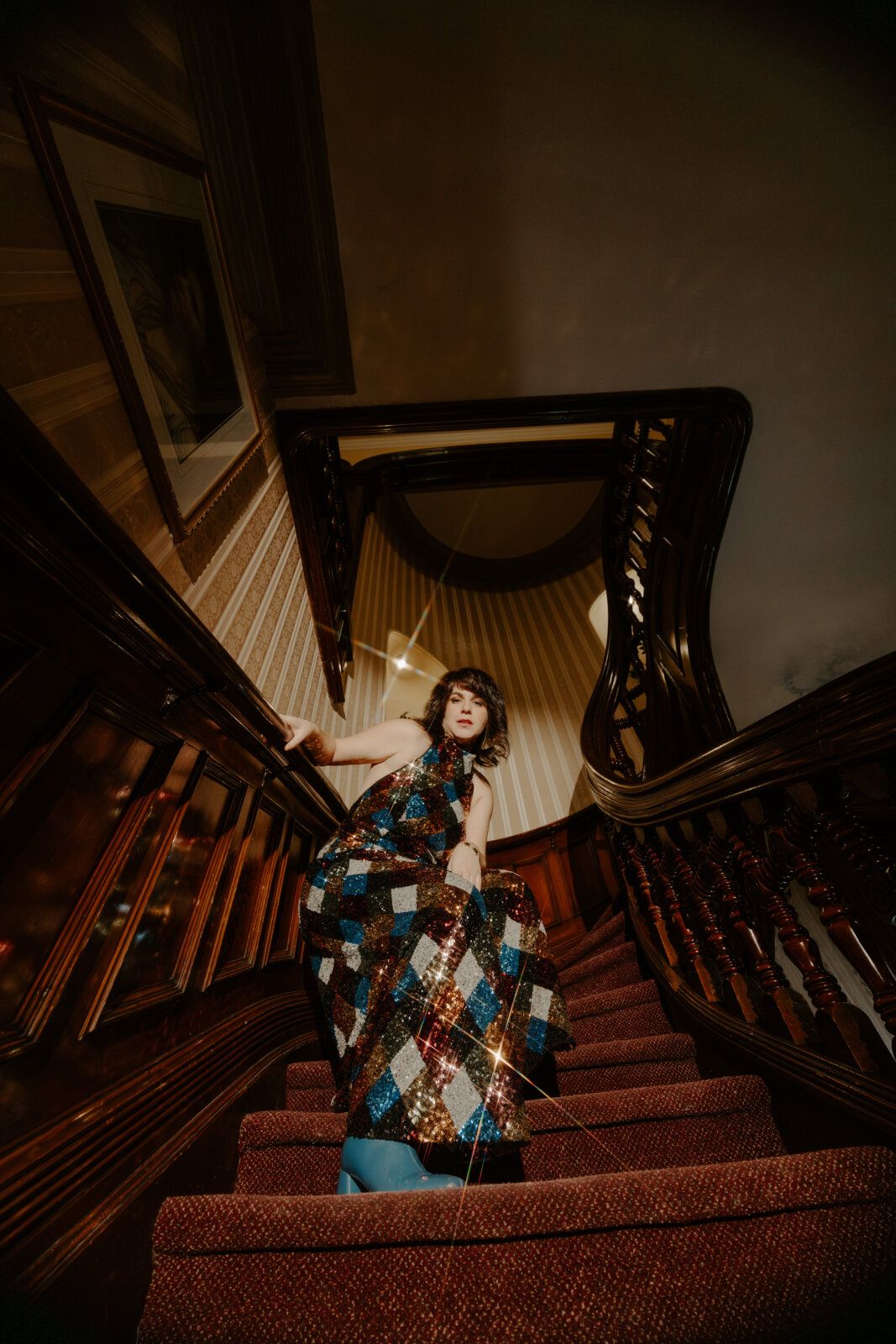
Lisa LeBlanc
Foto: Annie Francenoel



0 Kommentare